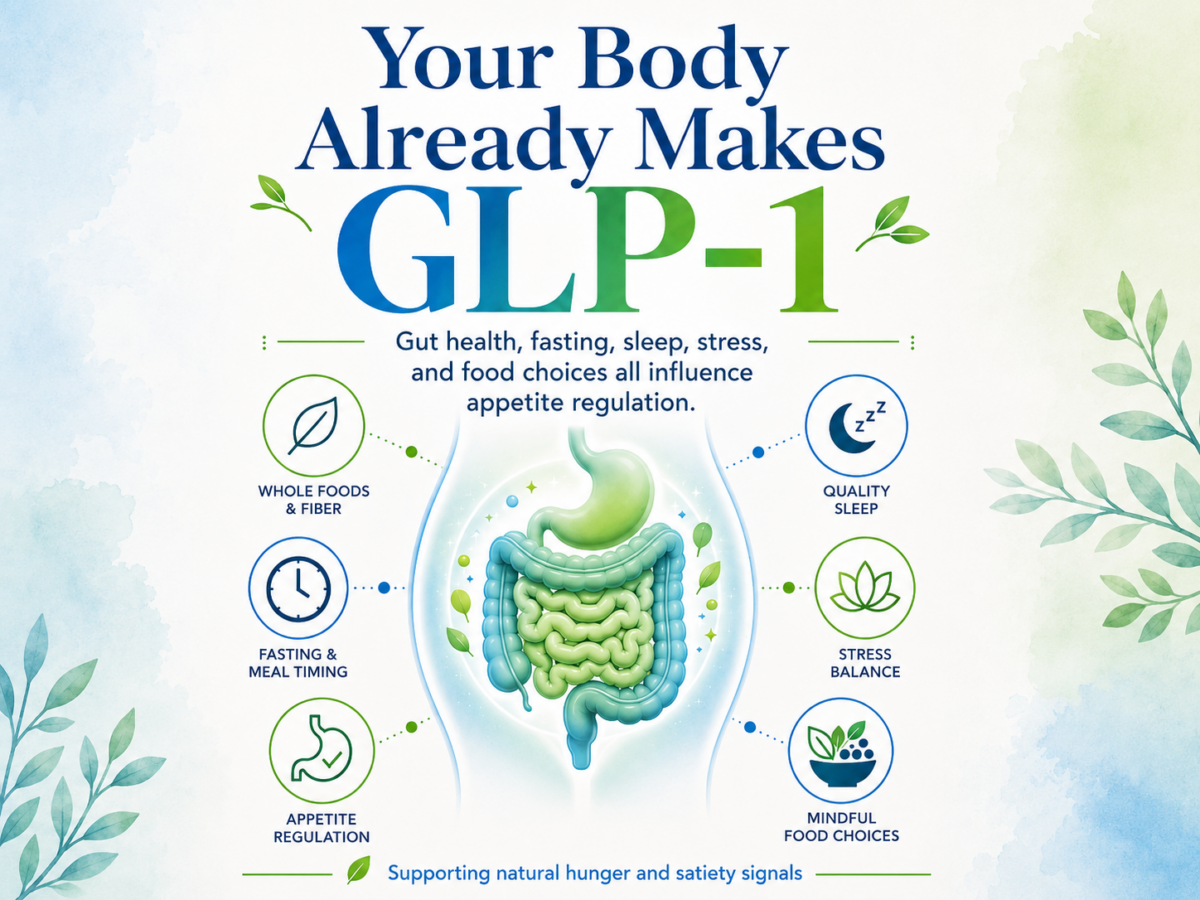
If you’ve been researching weight loss lately, you’ve probably heard a lot about GLP-1 medications and maybe you have tried them.
These medications have exploded in popularity because they help reduce appetite, decrease cravings, quiet food noise, and support weight loss. For many people, they can be incredibly helpful tools.
But what most people don’t realize is this:
Your body already makes its own GLP-1 naturally.
And when your gut and metabolism are functioning properly and producing GLP-1, your body has built-in systems designed to help regulate appetite, blood sugar, satiety, mood, and even cravings.
The problem is that modern lifestyle habits may be suppressing these natural systems.
This is one of the reasons so many people today feel hungry all the time, constantly think about food, struggle with cravings, and feel trapped in a cycle of overeating and weight gain — especially after 40.
In my work helping clients with Toronto weight loss through whole-food nutrition, metabolic strategies, and Lifestyle Medicine approaches, two of the most powerful tools we use are:
- intermittent fasting
- whole food nutrition
These strategies not only support sustainable fat loss but may also help improve gut health and naturally support GLP-1 production helping the body restore its own natural appetite regulation systems.
And much of that begins in the gut.
This is an important part of the education I provide to all my weight loss clients whether they are not using GLP-1 medications or have been prescribed and are receiving GLP-1 coaching through this approach for a sustainable GLP-1 weight loss program.
The Gut Is More Powerful Than Most People Realize
Your gut is not just responsible for digestion.
It is deeply connected to:
- appetite regulation
- metabolism
- blood sugar control
- inflammation
- hormone balance
- dopamine and serotonin production
- cravings and emotional eating
- immune health
- energy and mood
In fact, approximately 90% of serotonin — the neurotransmitter associated with mood and emotional balance — is produced in the gut.
Your gut microbiome, which is the ecosystem of bacteria living inside your digestive system, plays a major role in regulating these processes.
When the microbiome becomes unhealthy or imbalanced, it can affect hunger signals, insulin sensitivity, inflammation, mood, and the production of hormones like GLP-1.
This may contribute to:
- increased appetite
- more intense cravings
- increased food noise
- emotional eating
- poor blood sugar control
- weight gain
- difficulty losing stubborn fat
Many people blame themselves for lacking willpower when in reality their biology is working against them.
Why So Many People Feel Hungry And Think About Food All the Time
Many people blame themselves for lacking willpower.
But often, biology is playing a major role.
Researchers are now discovering that several aspects of modern life may negatively affect our natural GLP-1 production and gut health.
Some of the biggest contributors include:
- ultra-processed foods
- excessive sugar intake
- constant snacking
- poor sleep
- chronic stress
- lack of dietary fiber
- insulin resistance
- gut inflammation
- antibiotic overuse
- sedentary lifestyles
- eating from early morning until late at night without digestive rest periods
This constant stimulation of the digestive system may disrupt the gut microbiome and impair the body’s natural satiety signaling.
Over time, people begin to lose touch with true hunger and fullness cues and these habits may contribute to:
- increased appetite
- more food noise
- cravings for sugar and processed foods
- unstable blood sugar
- emotional eating
- reduced satiety signals
- weight gain and stubborn fat storage
There is also a strong connection between the gut and the brain.
Your gut microbiome — the ecosystem of bacteria living in your digestive tract — influences neurotransmitters like dopamine and serotonin, both of which affect mood, motivation, reward, and cravings.
In fact, most serotonin is produced in the gut.
This is where intermittent fasting and gut repair strategies can become incredibly powerful.
Can Fasting Help Reset the Gut?
Many experts in the fasting space, including Mindy Pelz, speak about the idea that strategic fasting gives the digestive system a break and may help support gut repair and microbiome balance.
While research is still evolving, there is growing evidence that intermittent fasting and longer fasting windows may help:
- improve insulin sensitivity
- reduce inflammation
- support gut healing
- stimulate cellular cleanup processes like autophagy
- improve metabolic flexibility
- positively influence the microbiome
- increase natural GLP-1 signaling
One reason fasting may help is because it creates periods where the gut is not constantly processing food.
Modern eating patterns often involve eating from morning until late at night, leaving almost no time for digestive rest.
Fasting introduces periods of recovery.
And this appears to matter not only for metabolism but also for gut bacteria.
Some studies suggest fasting may help increase the diversity of beneficial gut microbes which is important because a healthier microbiome is associated with better metabolic health and appetite regulation.
As an intermittent fasting doctor Toronto approach, I believe fasting works best when it is personalized and paired with muscle-supportive nutrition and sustainable lifestyle habits.
Since changing my weight loss approach over 13 years ago to include various fasting strategies combined with whole food nutrition many more weight loss clients notice:
cravings decrease
appetite becomes more manageable
energy improves
food noise quiets down
they feel more in control around food
But the Real Magic Happens After the Fast
This is where many people miss the opportunity.
Fasting alone is not enough.
What you eat after fasting may be just as important as the fast itself.
If someone breaks a fast with highly processed foods, excess sugar, refined carbohydrates, or inflammatory foods, they may undo many of the potential benefits.
The post-fast “rebuild phase” is where we can help nourish and rebuild beneficial gut bacteria and support an increase in natural GLP-1 production.
Foods That Help Support Natural GLP-1 Production
Research suggests certain foods may naturally stimulate GLP-1 release and improve satiety signaling.
These include:
Protein-Rich Foods
Protein is one of the strongest natural stimulators of GLP-1.
It also helps preserve muscle mass during weight loss which is something that becomes increasingly important after age 40 and even more important when using GLP-1 medications due to potential significant muscle loss.
Excellent protein sources include:
- eggs
- fish
- Greek yogurt
- chicken
- turkey
- tofu and tempeh
- cottage cheese
In my weight loss Toronto programs, preserving muscle while losing unhealthy fat is a major focus.
High-Fiber Foods
Fiber feeds beneficial gut bacteria, which then produce compounds called short-chain fatty acids that may support GLP-1 production and improve satiety.
Excellent choices include:
- leafy greens
- cruciferous vegetables
- berries
- chia seeds
- flax seeds
- lentils
- beans
- artichokes
- oats
One of the biggest problems with ultra-processed diets is the lack of fiber diversity needed to nourish a healthy microbiome.
Fermented Foods
Fermented foods may help support microbiome diversity.
Examples include:
- sauerkraut
- kimchi
- kefir
- plain yogurt
- miso
- kombucha
These foods introduce beneficial bacteria and may support gut health over time.
Healthy Fats
Healthy fats help improve satiety and blood sugar stability.
Examples include:
- avocado
- olive oil
- nuts
- seeds
- fatty fish
Stable blood sugar is one of the key drivers of reduced cravings and less food noise.
Why This Matters for Sustainable Weight Loss
One of the biggest concerns many people have about GLP-1 medications is:
“What happens when I stop?”
That’s an important question.
Because sustainable weight loss is not just about losing weight.
It is about creating a body and lifestyle that help maintain the results.
This is why I believe it’s so important to teach people how to support their own biology naturally through education, strategies and support rather than just offer temporary appetite suppression. This is true for all people trying to lose weight whether they use medication or not.
Whether someone chooses medication or not, they should understand how to:
- support their metabolism
- improve gut health
- preserve muscle mass
- reduce inflammation
- stabilize blood sugar
- naturally support appetite regulation
That is the foundation of sustainable weight loss.
And it’s why fasting and whole-food nutrition remain two of the key pillars in my programs.
When people improve gut health, stabilize blood sugar, increase protein and fiber intake, reduce inflammation, and use intermittent fasting strategically, many notice:
- reduced appetite
- fewer cravings
- less obsession with food
- improved energy
- better mood
- easier portion control
- more stable weight management
They no longer feel like they are fighting themselves all day.
Their biology begins working with them instead of against them.
The Goal Is to Help Your Biology Work for You Again
Your body was designed with powerful systems to regulate hunger, energy, satiety and metabolism.
But modern lifestyles can disrupt those systems.
The good news is that the body is remarkably adaptable.
Through strategic intermittent fasting, whole-food nutrition, improved gut health, muscle-supportive eating, and lifestyle medicine strategies, many people can begin restoring the natural mechanisms that help regulate appetite and metabolism.
And that changes everything.
Because when your biology starts working for you again, weight loss becomes less about willpower and more about alignment.
Want to understand whether GLP-1 support is the right fit for your body and goals?
Take the GLP-1 Readiness Assessment to better understand your options and learn whether your body may need more support with appetite regulation, cravings, food noise, metabolism, and sustainable weight loss.
Whether you are considering GLP-1 medication, currently using it, or looking for natural ways to support your body’s own GLP-1 response, this assessment can help you take the next step with more clarity.
Take the GLP-1 Readiness Assessment here.